10 At-Home Wellness Tips Every Bucks County Resident Should Know
*By Dr. Tony Gardner, Owner — Fairless Hills Chiropractor serving Morrisville, PA and Bucks County*
---
You don't have to be in pain to take care of your spine. In fact, the best time to protect your back, neck, and posture is *before* something goes wrong. As a chiropractor who has worked with families across Bucks County for years, I've seen firsthand how small, consistent daily habits can make a massive difference in long-term spinal health.
Whether you're working from a home office in Morrisville, chasing kids around Levittown, or sitting through long commutes into Philadelphia, these practical tips are designed to fit into your real life — no gym membership required.
Save this post. Share it. Come back to it. Your spine will thank you.
---
1. Fix Your Desk Setup Before It Fixes You (Badly)
If you're working from home or spending long hours at a computer, your workstation setup is one of the most important things you can address right now.
**Quick ergonomic checklist:**
- **Monitor height:** The top of your screen should be at or just below eye level. If you're looking down at a laptop all day, your neck is under serious strain.
- **Chair height:** Your feet should rest flat on the floor, with your knees at roughly a 90-degree angle.
- **Keyboard and mouse:** Keep them close enough that your elbows stay near your sides — not reaching forward.
- **Back support:** Use a lumbar support cushion or roll a small towel and place it at the curve of your lower back.
- **Screen distance:** Aim for about an arm's length away from your face.
> **Pro tip:** Set a timer every 30–45 minutes to stand up, walk around, and reset your posture. Sitting still — even with perfect posture — stiffens the spine over time.
---
2. The Best (and Worst) Sleep Positions for Your Spine
You spend roughly one-third of your life sleeping. The position you choose matters enormously for spinal alignment.
**Best positions:**
- **On your back with a pillow under your knees** — This is the gold standard. It keeps your spine in a neutral position and reduces pressure on the lumbar discs.
- **On your side with a pillow between your knees** — Great for people with lower back pain or sciatica. The pillow keeps your hips, pelvis, and spine aligned.
**Positions to avoid:**
- **Stomach sleeping** — This forces your neck to rotate to one side for hours at a time and flattens the natural curve of your lower back. If you can't break the habit, try placing a thin pillow under your pelvis to reduce strain.
**Pillow matters too:** Your pillow should fill the space between your head and the mattress without pushing your head forward. If you wake up with neck stiffness, your pillow height may be the culprit.
---
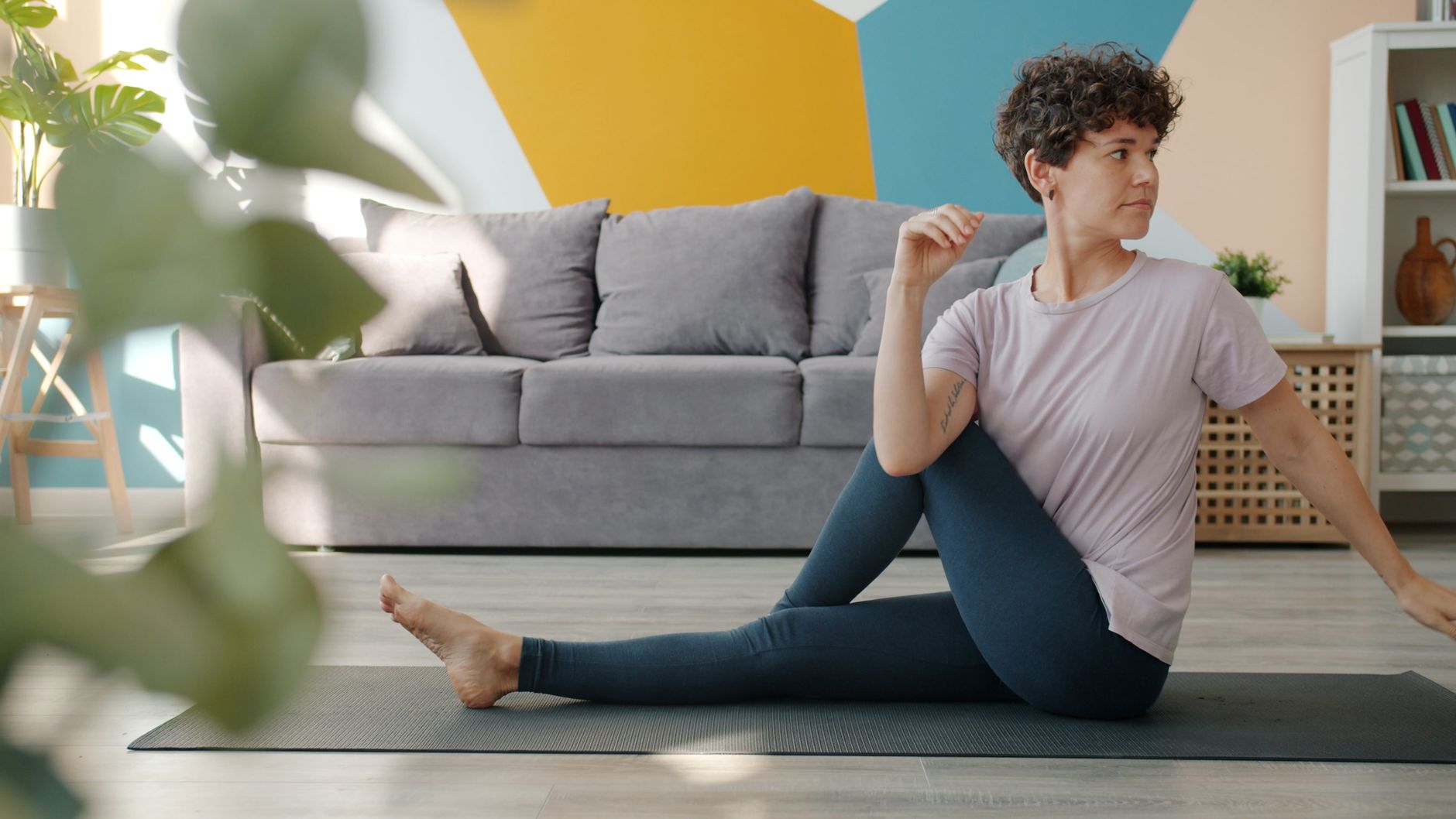
3. Five Morning Stretches That Take Less Than 10 Minutes
Starting your day with a few gentle stretches primes your spine, loosens tight muscles, and improves circulation before you even have your coffee.
Try this simple morning routine:
**1. Knee-to-Chest Stretch (Lower Back)**
Lie on your back. Slowly pull one knee toward your chest and hold for 20–30 seconds. Alternate sides. This decompresses the lumbar spine.
**2. Cat-Cow Stretch (Spinal Mobility)**
On hands and knees, slowly arch your back upward (cat) then let it sag downward (cow). Repeat 8–10 times. This lubricates the spinal joints and wakes up your core.
**3. Chin Tucks (Neck Posture)**
Sitting or standing, gently pull your chin straight back — like you're making a double chin. Hold 5 seconds, repeat 10 times. This corrects forward head posture and relieves neck tension.
**4. Piriformis Stretch (Hips and Sciatica Relief)**
Lie on your back, cross one ankle over the opposite knee, and gently pull the uncrossed leg toward your chest. Hold 30 seconds each side. This targets the piriformis muscle, which can compress the sciatic nerve.
**5. Thoracic Extension Over a Rolled Towel (Mid-Back)**
Roll a towel lengthwise and place it horizontally under your mid-back. Gently extend over it with arms crossed over your chest. This counteracts the hunched position most of us sit in all day.
---
4. Posture Fixes You Can Do Right Now
Poor posture doesn't develop overnight — and it doesn't fix itself overnight either. But awareness is the first step.
**The wall test:** Stand with your back against a wall. Your heels, glutes, shoulder blades, and the back of your head should all touch the wall. If there's a large gap at your lower back or your head can't reach the wall, you have postural imbalances worth addressing.
**Practical daily fixes:**
- **When standing:** Distribute weight evenly on both feet. Avoid locking your knees or shifting all your weight to one hip.
- **When sitting:** Sit back fully in your chair so your back is supported. Don't perch on the edge.
- **When looking at your phone:** Raise the phone to eye level instead of dropping your head. "Text neck" is a real condition — for every inch your head tilts forward, the effective weight on your spine increases by roughly 10 pounds.
- **When driving:** Adjust your seat so you're not reaching for the steering wheel. Your back should be fully supported by the seat.
---
5. Strengthen Your Core (Your Spine's Best Friend)
Your core isn't just your abs — it's the entire muscular system that supports your spine from the front, back, and sides. A weak core puts the burden of spinal support entirely on your bones and discs.
**Beginner-friendly core exercises:**
- **Dead Bug:** Lie on your back, arms pointed at the ceiling, knees bent at 90 degrees. Slowly lower one arm overhead while extending the opposite leg. Return and alternate. This trains deep core stability without straining the back.
- **Bird Dog:** On hands and knees, extend one arm and the opposite leg simultaneously. Hold 5 seconds, alternate. Excellent for spinal stability.
- **Glute Bridge:** Lie on your back with knees bent, feet flat. Push through your heels to lift your hips off the floor. Hold at the top for 2–3 seconds. Strong glutes take pressure off the lower back.
Aim for 10–15 minutes of core work 3–4 times per week.
---
6. Hydration and Your Spinal Discs
This one surprises people: your spinal discs are largely made of water. The gel-like center of each disc — called the nucleus pulposus — depends on adequate hydration to maintain its shock-absorbing properties.
When you're chronically dehydrated, your discs become less resilient, which increases the risk of disc bulges, herniations, and general back pain.
**Simple goal:** Aim for at least half your body weight in ounces of water per day. If you weigh 160 pounds, that's 80 ounces — about 10 cups.
Start your morning with a full glass of water before coffee. Your spine will notice the difference.
---
7. How to Lift Properly (And Why It Actually Matters)
Lower back injuries from improper lifting are one of the most common reasons patients visit our Morrisville chiropractic office. The mechanics are simple — but people forget them under the pressure of everyday tasks.
**Safe lifting technique:**
1. Stand close to the object.
2. Feet shoulder-width apart for a stable base.
3. Bend at the hips and knees — not the waist.
4. Keep the object close to your body as you lift.
5. Engage your core before you lift.
6. Rise by straightening your legs, keeping your back straight.
7. Never twist while lifting — pivot your feet instead.
This applies to everything: grocery bags, laundry baskets, kids, boxes in the garage.
---
8. Ice vs. Heat — Which One Should You Use?
One of the most common questions I get: *"Should I use ice or heat?"*
Here's the simple guide:
**Use ice (first 24–72 hours after injury):**
- Acute injuries with swelling or inflammation
- Fresh muscle strains or sprains
- After intense exercise
- Apply for 15–20 minutes at a time with a cloth barrier
**Use heat (chronic pain, stiffness, muscle tension):**
- Ongoing back or neck stiffness
- Muscle tightness before stretching
- Chronic conditions without active inflammation
- Apply for 15–20 minutes at a time — never fall asleep with a heating pad
When in doubt, ice is generally safer for acute situations. If you're unsure what you're dealing with, call our office and we'll help you figure it out.
---
9. Breathing for Spinal Health
This might sound unusual, but how you breathe directly affects your spine and posture. Shallow chest breathing — which most stressed adults default to — keeps the upper trapezius muscles tight and contributes to neck and shoulder tension.
**Diaphragmatic breathing (belly breathing):**
1. Sit or lie comfortably.
2. Place one hand on your chest, one on your belly.
3. Inhale through your nose for 4 counts — your belly should rise, not your chest.
4. Exhale slowly through your mouth for 6 counts.
5. Repeat 5–10 times.
Practicing this for just 5 minutes a day can reduce muscle tension in the neck and upper back, lower cortisol levels, and improve overall posture by re-engaging the diaphragm.
---
10. Know When to Come In
At-home care is powerful — but it has limits. Some conditions genuinely need professional evaluation and treatment. Please don't try to stretch or "push through" the following:
- **Pain that radiates down your arm or leg** — This can indicate nerve compression.
- **Numbness, tingling, or weakness in your limbs** — Always worth getting evaluated.
- **Pain that wakes you up at night** — This is your body sending a signal.
- **Back or neck pain following a car accident** — Even minor accidents can cause whiplash and soft tissue injuries that aren't immediately obvious.
- **Headaches that occur daily or are getting worse** — Cervicogenic headaches often originate in the neck and respond very well to chiropractic care.
- **Pain that hasn't improved after 1–2 weeks of home care** — Time to get a professional assessment.
We serve patients throughout Bucks County from our Morrisville, PA office. Whether you're dealing with an acute injury or just want to stay ahead of problems before they start, we're here to help.
---
Final Thoughts from Dr. Gardner
Wellness isn't a destination — it's a daily practice. The good news is that small, consistent actions compound over time. Fixing your desk setup, sleeping with better alignment, stretching for 10 minutes in the morning, drinking more water — none of these things are dramatic. But done consistently, they can dramatically change how you feel.
Bookmark this page. Share it with a neighbor, a coworker, or a family member who's been complaining about back pain. And if you ever have questions or want to come in for an evaluation, our team is always happy to help.
**Ready to take the next step?** [Schedule an appointment at our Morrisville chiropractic office](https://fairlesshillschiropractor.com/) and let's build a wellness plan that works for your life.
---
*Dr. Tony Gardner is the owner of Fairless Hills Chiropractor, serving Morrisville, PA and the greater Bucks County area. His practice focuses on spinal health, injury recovery, and whole-family wellness care.*
