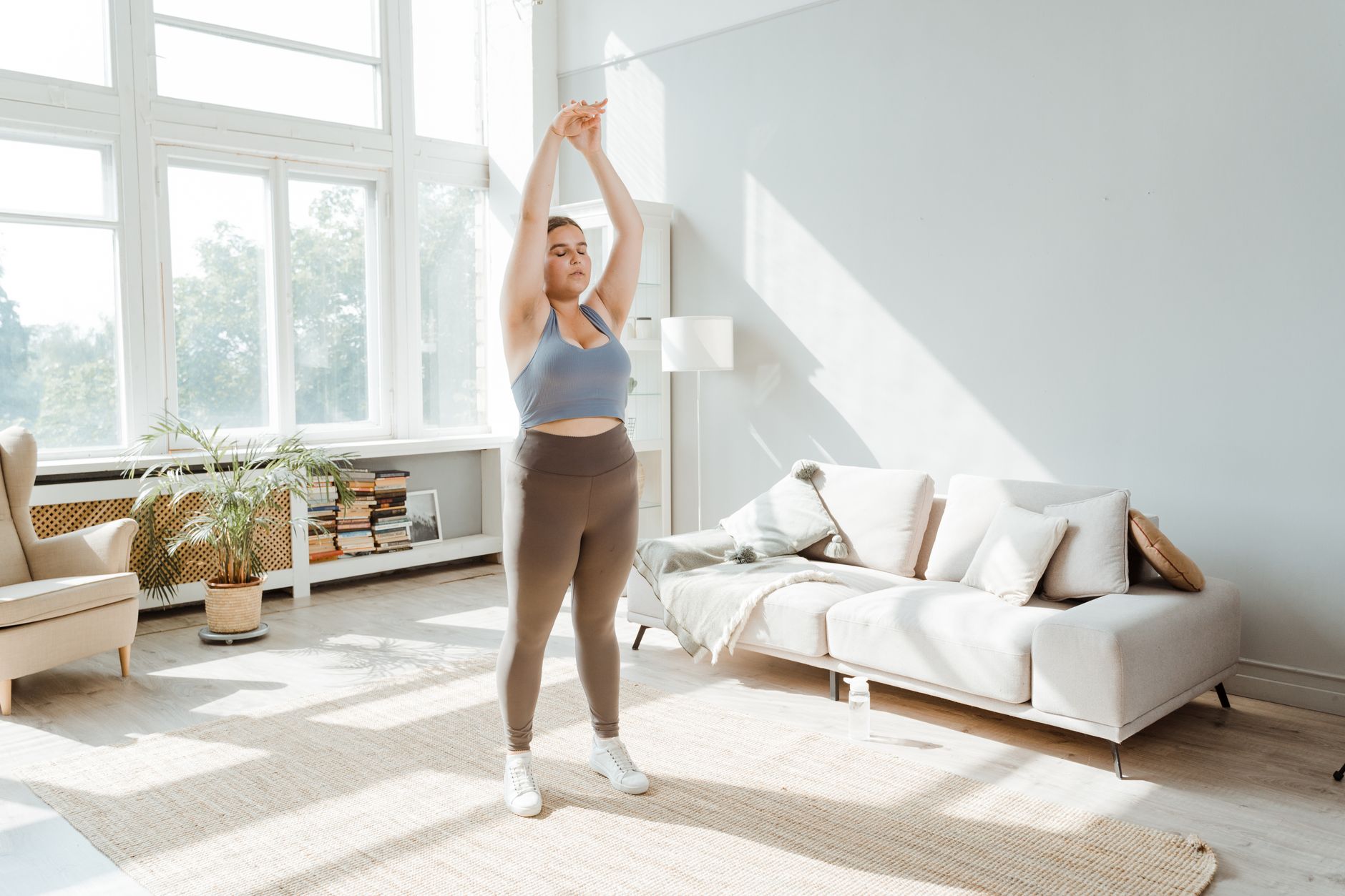
At-Home Wellness Tips From a Bucks County Chiropractor: Stretches, Posture Fixes, Sleep Positions & Desk Setups
*By Dr. Tony Gardner, Owner — Fairless Hills Chiropractic, serving Morrisville and Bucks County, PA*
---
You don't have to be in pain to think about your spine. In fact, the best time to take care of your body is *before* the aches and stiffness set in. As a chiropractor serving Morrisville and the greater Bucks County area, I see patients every week who could have avoided a lot of discomfort with a few simple daily habits.
This guide is designed to be your go-to resource — something you can bookmark, share with a friend, or come back to whenever your neck feels stiff, your lower back is nagging you, or you've been sitting at your desk a little too long. Let's get into it.
---
🧘 Section 1: Daily Stretches That Make a Real Difference
Stretching isn't just for athletes. It's one of the most powerful tools you have for maintaining spinal health, reducing tension, and keeping your joints moving freely. Here are my top recommendations for Bucks County patients who want to stay proactive.
Morning Stretch Routine (5–10 Minutes)
Do these before you even pour your coffee:
**1. Cat-Cow Stretch**
- Start on all fours with your hands under your shoulders and knees under your hips.
- Inhale and let your belly drop toward the floor, lifting your head and tailbone (Cow).
- Exhale and round your spine toward the ceiling, tucking your chin and pelvis (Cat).
- Repeat 8–10 times slowly.
- *Why it works:* This mobilizes the entire spine, wakes up the muscles surrounding the vertebrae, and helps reverse the compression that builds up overnight.
**2. Child's Pose**
- From all fours, sit your hips back toward your heels and extend your arms forward on the floor.
- Hold for 30–60 seconds, breathing deeply.
- *Why it works:* Gently decompresses the lumbar spine and stretches the hips and lower back — two areas where tension loves to hide.
**3. Doorway Chest Opener**
- Stand in a doorway with your arms at 90-degree angles, forearms resting on the frame.
- Gently step one foot forward until you feel a stretch across your chest and the front of your shoulders.
- Hold 20–30 seconds, repeat twice.
- *Why it works:* Counteracts the forward-rounding posture most of us develop from phone and computer use.
**4. Chin Tucks**
- Sit or stand tall. Gently pull your chin straight back (like you're making a double chin).
- Hold for 5 seconds. Release. Repeat 10 times.
- *Why it works:* This is one of the most effective exercises for correcting forward head posture, which is one of the leading causes of neck pain and headaches I see in my Morrisville patients.
---
Evening Wind-Down Stretches
These are perfect before bed to release the tension of the day:
**5. Supine Knee-to-Chest Stretch**
- Lie on your back. Pull one knee toward your chest and hold for 20–30 seconds.
- Switch legs. Then pull both knees to your chest together.
- *Why it works:* Releases tension in the lumbar spine and hip flexors.
**6. Figure-4 Piriformis Stretch**
- Lie on your back with knees bent. Cross your right ankle over your left knee.
- Gently press the right knee away from you and hold for 30 seconds.
- Switch sides.
- *Why it works:* Targets the piriformis muscle, which when tight can compress the sciatic nerve — a common cause of sciatica pain.
**7. Seated Thoracic Rotation**
- Sit in a chair with your feet flat on the floor. Cross your arms over your chest.
- Slowly rotate your upper body to the right as far as comfortable. Hold 3 seconds. Return to center.
- Repeat on the left. Do 8–10 reps per side.
- *Why it works:* Improves mid-back mobility, which often gets stiff from prolonged sitting.
---
🪑 Section 2: Posture Fixes You Can Start Today
Poor posture is an epidemic in Bucks County — and honestly, everywhere. Between smartphones, desk jobs, and long commutes, our spines take a beating. Here's how to fight back.
The Most Common Posture Problems I See
- **Forward head posture** — Your head juts forward of your shoulders. For every inch your head moves forward, it adds roughly 10 pounds of stress to your cervical spine.
- **Rounded shoulders** — Caused by too much time with your arms in front of you (typing, driving, scrolling).
- **Anterior pelvic tilt** — Your lower back arches excessively and your belly tilts forward. Often caused by weak core muscles and tight hip flexors.
- **Text neck** — Looking down at your phone for extended periods flattens the natural curve of your neck.
Quick Posture Fixes
**The Wall Test**
Stand with your back against a wall. Your heels, buttocks, shoulder blades, and the back of your head should all touch the wall. If your head can't reach without straining, you likely have forward head posture. Practice standing this way for 1–2 minutes daily to retrain your body's sense of alignment.
**The 20-20-20 Rule (for screens)**
Every 20 minutes, look at something 20 feet away for 20 seconds. While you're at it, reset your posture: sit tall, roll your shoulders back and down, and do a quick chin tuck.
**Strengthen Your Core**
A strong core is the foundation of good posture. You don't need a gym — simple exercises like dead bugs, bird dogs, and glute bridges done 3–4 times per week can make a significant difference.
**Posture Reminder Apps**
Apps like *Upright* or even simple phone reminders every hour can prompt you to check your alignment. It sounds small, but consistency is everything.
---
😴 Section 3: The Best (and Worst) Sleep Positions for Your Spine
You spend roughly a third of your life sleeping. The position you choose — and the pillow and mattress you use — has a real impact on your spinal health.
Best Sleep Positions
**On Your Back (Best for Most People)**
- Sleeping on your back with a pillow under your knees is ideal for spinal alignment.
- It distributes your body weight evenly and keeps your spine in a neutral position.
- Use a cervical pillow (one that supports the natural curve of your neck) rather than a thick, fluffy pillow that pushes your head forward.
**On Your Side (Great for Snorers and Pregnant Women)**
- Place a pillow between your knees to keep your hips, pelvis, and spine aligned.
- Avoid curling into a tight fetal position — keep your body relatively straight.
- Your pillow should fill the space between your ear and shoulder so your neck stays neutral.
- *Note for my prenatal chiropractic patients:* Sleeping on your left side during pregnancy is generally recommended to improve circulation.
Positions to Avoid
**Stomach Sleeping (Worst for Your Spine)**
- Sleeping on your stomach forces your neck to rotate to one side for hours at a time, straining the cervical spine and compressing the lumbar vertebrae.
- If you're a stomach sleeper and can't break the habit, try placing a thin pillow under your pelvis (not your head) to reduce lumbar strain.
Mattress and Pillow Tips
- **Mattress:** Medium-firm is the sweet spot for most people. A mattress that's too soft doesn't support the spine; one that's too hard creates pressure points.
- **Pillow height:** Should match the distance from your ear to your shoulder when side-sleeping. Back sleepers need a flatter pillow.
- **Replace your pillow** every 1–2 years. Old pillows lose their support and can harbor allergens.
---
💻 Section 4: Ergonomic Desk Setups That Protect Your Back and Neck
With so many Bucks County residents working from home or in office settings, desk ergonomics have become one of the most important — and most overlooked — aspects of spinal health. Here's how to set up your workspace the right way.
The Ideal Desk Setup (Checklist)
**Monitor Height**
- The top of your screen should be at or slightly below eye level.
- Position it an arm's length away (roughly 20–28 inches from your face).
- If you use a laptop, get a laptop stand and an external keyboard to raise the screen.
**Chair Height and Position**
- Your feet should be flat on the floor (or on a footrest).
- Your knees should be at roughly a 90-degree angle.
- Your hips should be at or slightly above knee level.
- Your lower back should be supported — use a lumbar support cushion if your chair doesn't have built-in lumbar support.
**Keyboard and Mouse Placement**
- Keep your keyboard and mouse close enough that your elbows stay at roughly 90 degrees.
- Your wrists should be neutral — not bent up or down.
- Consider a wrist rest if you type for long periods.
**Phone Use**
- Never cradle your phone between your ear and shoulder. Use a headset or speakerphone.
- Keep your phone at eye level when reading or scrolling to avoid text neck.
**Standing Desks**
- If you have access to a standing desk, alternate between sitting and standing throughout the day. Standing all day is just as problematic as sitting all day.
- Wear supportive footwear or use an anti-fatigue mat when standing.
The Golden Rule: Move Every Hour
No ergonomic setup in the world can fully compensate for prolonged static posture. Set a timer. Every hour, stand up, walk around for 2–3 minutes, do a few stretches from Section 1, and then return to your desk. This simple habit reduces muscle fatigue, improves circulation, and significantly decreases the risk of chronic back and neck pain.
---
🏡 Bonus Tips for Everyday Life in Bucks County
**In the Car**
- Adjust your seat so your knees are at or slightly below hip level.
- Keep the headrest positioned to support the middle of the back of your head.
- Take breaks on long drives — even 5 minutes of walking at a rest stop makes a difference.
**Lifting Heavy Objects**
- Bend at the knees, not the waist. Keep the object close to your body.
- Never twist while lifting. Turn your whole body instead.
**Hydration**
- The discs between your vertebrae are largely made of water. Staying hydrated helps maintain disc height and flexibility. Aim for at least 8 glasses of water per day.
**Footwear**
- Worn-out shoes alter your gait and can cause a chain reaction of imbalance all the way up to your spine. Replace athletic shoes every 300–500 miles.
---
When At-Home Tips Aren't Enough
These tips are powerful — and I encourage every patient and reader to build them into daily life. But sometimes the body needs more than stretching and a better pillow. If you're experiencing any of the following, it's time to come in and see me:
- Persistent neck or back pain that doesn't improve with rest
- Pain, tingling, or numbness that radiates down your arm or leg
- Headaches that occur frequently or feel different than usual
- Stiffness that limits your range of motion
- Pain following a car accident, sports injury, or fall
- Pregnancy-related back pain or pelvic discomfort
At my Fairless Hills practice, I work with patients across Morrisville, Bucks County, and the surrounding areas to create personalized care plans that address the root cause of pain — not just the symptoms. Whether you're dealing with sciatica, recovering from an auto accident, managing a sports injury, or simply want to feel your best, I'm here to help.
---
Ready to Feel Better? Let's Talk.
If this guide was helpful, save it and share it with someone in your life who could use it. And when you're ready for a professional evaluation, I'd love to see you in the office.
📍 **Fairless Hills Chiropractic**
Serving Morrisville, Bucks County, and surrounding communities in PA
🌐 [fairlesshillschiropractor.com](https://fairlesshillschiropractor.com/)
*Dr. Tony Gardner is a licensed chiropractor and owner of Fairless Hills Chiropractic. He has been helping Bucks County families live pain-free through personalized, evidence-informed chiropractic care.*
---
*Disclaimer: This blog post is for informational purposes only and does not constitute medical advice. Please consult with a qualified healthcare provider before beginning any new exercise or wellness program.*
