What Is a Herniated Disc? A Chiropractor Explains What's Really Happening in Your Spine
You've just left your doctor's office with a diagnosis — herniated disc — and a printout you barely had time to read. Maybe you're in pain. Maybe you're scared. Maybe you're Googling at midnight trying to figure out if you'll ever feel normal again.
You're not alone. As a chiropractor serving Morrisville and the greater Bucks County area, I hear this story almost every week. Patients come in confused, frustrated, and often convinced that surgery is their only option.
It's usually not. And understanding what's actually happening in your body is the first step toward healing.
Let me break it down in plain language.
---
Your Spine Is a Stack of Cushions and Bones
Before we talk about what goes wrong, let's talk about what's supposed to go right.
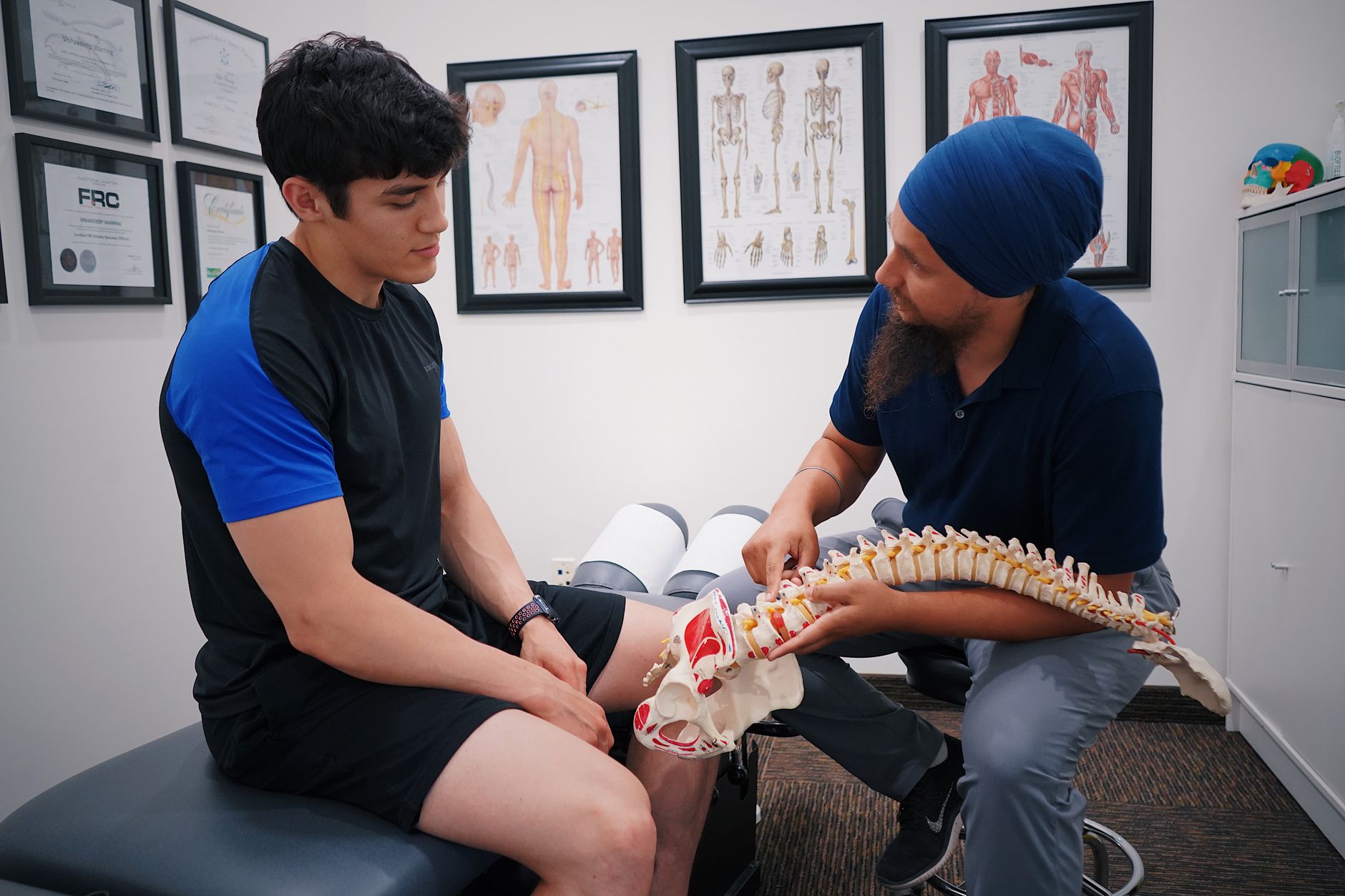
Your spine is made up of 33 vertebrae — the bony building blocks that protect your spinal cord and give your body structure. Between most of those vertebrae sit **intervertebral discs**, which act like shock absorbers. Think of them as small, tough pillows that keep the bones from grinding against each other and allow your spine to flex, bend, and rotate.
Each disc has two parts:
- **The annulus fibrosus** — a tough, fibrous outer ring, almost like the casing of a tire
- **The nucleus pulposus** — a soft, gel-like center, similar to the jelly inside a donut
When everything is working the way it should, these discs distribute pressure evenly across your spine and give you the range of motion to live your life without thinking twice about it.
---
So What Actually Happens When a Disc Herniates?
A herniated disc — sometimes called a slipped disc, ruptured disc, or bulging disc (though these terms aren't always interchangeable) — occurs when the soft inner gel of the disc pushes through a crack or weakness in the outer fibrous ring.
Here's a simple way to visualize it: imagine squeezing a jelly donut on one side. The jelly has to go somewhere — and it bulges out the other side.
When that displaced material pushes outward, it can:
- **Press on nearby spinal nerves**, causing pain, numbness, or tingling that radiates down your arms or legs
- **Irritate the surrounding tissue**, causing localized inflammation and muscle spasms
- **Narrow the spinal canal**, a condition called spinal stenosis, which can create more widespread symptoms
The location of the herniation matters enormously. A herniated disc in your **lower back (lumbar spine)** often causes leg pain — this is the classic presentation of sciatica. A herniated disc in your **neck (cervical spine)** can cause shooting pain, weakness, or numbness down one or both arms.
---
What Causes a Disc to Herniate?
This is where patients are often surprised. A herniated disc isn't always the result of one dramatic injury. In fact, most herniations happen gradually over time due to:
1. **Cumulative Wear and Tear** As we age, our discs naturally lose water content and become less flexible. This makes them more susceptible to cracking and tearing — even from minor stress.
2. **Repetitive Movements** Jobs or activities that involve repeated bending, twisting, or lifting can slowly weaken the outer disc wall. Construction workers, nurses, and desk workers who sit with poor posture are all at risk.
3. **Sudden Strain or Trauma** Lifting something heavy with improper form, a car accident, or a sports injury can cause an acute herniation — especially if the disc was already compromised.
4. **Poor Posture Over Time** This one surprises people. Sitting for hours with a forward head posture or hunched shoulders puts uneven pressure on your discs. Over months and years, that uneven loading can cause the disc to break down asymmetrically.
5. **Genetics** Some people are simply predisposed to disc problems due to inherited differences in disc composition and spinal structure.
---
What Does a Herniated Disc Feel Like?
Symptoms vary widely depending on which disc is affected and how much nerve compression is involved. Some people have a herniated disc and feel almost nothing. Others are in significant pain.
Common symptoms include:
- **Sharp, shooting pain** in the back, neck, buttock, or down one leg or arm
- **Numbness or tingling** in the extremities
- **Muscle weakness** — you might notice your grip is weaker, or your leg feels like it might give out
- **Pain that worsens with sitting**, bending forward, coughing, or sneezing
- **Pain that improves when you move around** or change positions
If you're experiencing **loss of bladder or bowel control** along with back pain, that is a medical emergency. Please go to an emergency room immediately — this can indicate a rare but serious condition called cauda equina syndrome.
---
How Is a Herniated Disc Diagnosed?
A thorough clinical examination is the starting point. As a chiropractor, I'll assess your range of motion, perform orthopedic and neurological tests, and listen carefully to how and when your symptoms occur.
Imaging can help confirm the diagnosis:
- **X-rays** show bone structure and can reveal disc space narrowing
- **MRI** is the gold standard for visualizing soft tissue and confirming disc herniation
- **CT scans** are sometimes used when MRI isn't available
One important note: imaging findings don't always match symptoms. Studies have shown that a significant percentage of people have herniated discs visible on MRI with **zero pain or symptoms**. This is why we treat the patient, not the image.
---
Can Chiropractic Care Help a Herniated Disc?
This is the question I get most often — and the honest answer is: **yes, for most patients, chiropractic care is an effective and conservative first-line treatment.**
Research consistently supports chiropractic as a safe, non-invasive approach to managing disc-related pain. Here's what care might look like at our Morrisville office:
**Spinal Manipulation** Gentle, targeted adjustments help restore proper movement to the joints surrounding the affected disc. This reduces mechanical stress, decreases nerve irritation, and can provide meaningful pain relief — often faster than patients expect.
**Flexion-Distraction Technique** This is a specialized technique particularly well-suited for lumbar disc herniations. Using a specially designed table, I apply a gentle pumping motion to the spine that helps draw the herniated material back toward the center of the disc and reduces pressure on the nerve.
**Soft Tissue Therapy** Muscle spasm and tension almost always accompany disc problems. Addressing the surrounding soft tissue helps reduce pain and improve recovery.
**Rehabilitative Exercise** Strengthening the core muscles that support your spine is critical for long-term recovery. I'll guide you through specific exercises designed for your condition and fitness level.
**Posture and Ergonomic Counseling** If poor posture contributed to your disc problem — and it often does — we'll work together to correct it. Small changes in how you sit, stand, and move can make a significant difference in preventing future episodes.
---
When Is Surgery Actually Necessary?
I want to be honest with you here, because I think patients deserve straight answers.
Surgery is sometimes the right choice — but it's rarely the first choice. Most herniated disc cases resolve with conservative care within **6 to 12 weeks**. Studies show that chiropractic care, physical therapy, and time produce outcomes comparable to surgery for the vast majority of patients.
Surgery may be considered when:
- Conservative treatment has failed after an adequate trial (typically 6–12 weeks)
- You have progressive neurological deficits (increasing weakness, spreading numbness)
- You are experiencing cauda equina syndrome
Even then, getting a second opinion is always reasonable.
---
What Should You Do If You Think You Have a Herniated Disc?
Start with a proper evaluation. Don't wait for the pain to become unbearable, and don't assume surgery is inevitable.
If you're in Morrisville, Fairless Hills, or anywhere in Bucks County, I'd encourage you to come in for a consultation. We'll talk through your symptoms, examine your spine, review any imaging you have, and put together a plan that makes sense for your life — not just your MRI.
Healing from a herniated disc takes time, but most people do heal. Understanding what's happening in your body is a powerful first step.
---
Frequently Asked Questions
**Can a herniated disc heal on its own?**
Yes, in many cases. The body can reabsorb herniated disc material over time, especially with proper care and movement. This process can take weeks to months.
**Is it safe to exercise with a herniated disc?**
Generally yes, with guidance. Certain movements will aggravate symptoms while others promote healing. A chiropractor or physical therapist can help you identify which is which.
**How long does recovery take?**
Most patients experience significant improvement within 4–12 weeks of beginning conservative care. Chronic or severe cases may take longer.
**Will I need to keep coming back forever?**
Not necessarily. The goal of care is to get you better and keep you better — with the tools and knowledge to maintain your own spinal health long-term.
---
*Dr. Tony Gardner is a chiropractor serving Morrisville, Fairless Hills, and the greater Bucks County, PA area. If you have questions about disc pain or spinal health, call our office or request a consultation online at [fairlesshillschiropractor.com](https://fairlesshillschiropractor.com/).*
